Convert Pro Forma to a Compliant VAT Invoice in 30 Days (UK)
A pro forma invoice is a non-binding preview of a sale, not a VAT invoice, and it does not create a tax point on its own. In the UK, that tax point is triggered by payment or by issuing a proper VAT invoice, whichever happens first. Label the document clearly, and be ready to issue a compliant VAT invoice the moment money lands in your account.
TL;DR:
- A pro forma invoice is a non-binding document used for quoting, deposits, and customs, but it cannot replace a VAT invoice for tax purposes.
- The UK tax point is established when payment is received or a formal VAT invoice is issued, whichever occurs first, within a strict 30-day deadline.
- A proper VAT invoice must include specific details, such as a unique number, VAT registration number, date, and detailed breakdown, which a pro forma does not provide.
- When crossing borders, pro formas should include accurate commodity codes, weights, origin, and value estimates to avoid delays and customs issues post-Brexit.
- Automating the switch from pro forma to VAT invoice helps prevent compliance errors by ensuring timely and accurate invoicing, especially for deposits and export transactions.
Table of Contents
- What is a pro forma invoice, and how does it differ from a VAT invoice?
- How do pro forma invoices interact with UK VAT?
- What should you put on a UK pro forma invoice?
- When should UK businesses actually use one?
- Pro forma invoices and customs after Brexit
- Why automating the pro forma to VAT invoice handoff matters
- Get started with free pro forma and VAT invoice templates
- Where these figures come from
- Sources
What is a pro forma invoice, and how does it differ from a VAT invoice?
A pro forma invoice is a preview document. It tells a buyer what they’ll owe, for what, and under what terms, but it carries no legal weight and creates no accounting entry. HMRC’s own guidance is blunt about this: marking a document “pro forma invoice” means it automatically fails the legal requirements for a VAT invoice, no matter how complete the details look.
That distinction matters because three other documents get confused with it constantly:
- VAT invoice: legally required, feeds your accounting records, and creates tax obligations for both parties.
- Quote or estimate: an informal price indication, often less detailed and rarely formatted like an invoice.
- Purchase order: issued by the buyer, not the seller, confirming intent to purchase under agreed terms.
A pro forma sits closest to a quote, dressed up to look official. Businesses issue it to confirm pricing before a deal is locked in, request a deposit, or hand a buyer something concrete enough to secure financing or import approval. None of that requires it to touch your VAT return.
How do pro forma invoices interact with UK VAT?
This is where a lot of small businesses trip up. Sending a pro forma invoice does not start the VAT clock. According to Stripe’s UK guidance, the tax point is created either when payment is received or when a formal VAT invoice is issued, whichever comes first. If a customer pays against your pro forma, that payment date becomes your tax point, whether you’ve sent a real VAT invoice yet or not.
Once that tax point exists, the clock starts ticking. Here’s what happens next:
- Payment lands, or you decide to issue the invoice, and the tax point is set.
- You must issue a valid VAT invoice within 30 days of that tax point.
- The VAT invoice must carry the full required detail. A pro forma, no matter how it’s labeled, does not satisfy this.
The 30-day window is not a suggestion. Miss it, and you’re technically out of compliance even if you eventually get the paperwork right, because HMRC treats the deadline as a hard requirement tied to the actual tax point, not the date you got around to typing up the invoice.
The required fields on that VAT invoice include a unique invoice number, your VAT registration number, the invoice date and tax point, both business names and addresses, a description of goods or services, quantity and unit price, the VAT rate and amount, and totals shown both excluding and including VAT. Miss any of these, and your customer may struggle to reclaim input VAT, which tends to generate an awkward phone call fairly quickly. The most common mistake is treating the pro forma as the final document and simply forgetting to issue the real invoice once payment clears.
What should you put on a UK pro forma invoice?
Start with the label. Print “This is not a VAT invoice” somewhere visible. It sounds redundant until a customer’s finance team tries to claim VAT back on it and comes back confused, according to Sage’s guidance on avoiding this exact mix-up.
Beyond that, a solid pro forma includes:
- Seller and buyer details, including full names and addresses.
- Item or service descriptions with provisional quantities and prices.
- Currency, since many pro formas support international buyers.
- Incoterms and HS or UK commodity codes, if goods are crossing a border.
- Weights and dimensions for export shipments.
- A validity or expiry date, so the buyer knows the price window before costs shift.
- Payment terms and any deposit percentage expected upfront.
When payment does come in against a pro forma, don’t just relabel the same file. Add the missing VAT invoice fields: your VAT registration number, a unique sequential invoice number, the actual tax point date, and the VAT breakdown by rate. Some businesses issue this as a “deposit VAT invoice” covering only the amount received, then a final invoice once the job wraps.
Pro Tip: Keep your pro forma and its converted VAT invoice under a matching reference number. When HMRC or a customer’s accounts team asks to trace a payment back to its origin, that link saves you an afternoon of digging through email threads.
When should UK businesses actually use one?
Not every sale needs a pro forma. It earns its place in specific situations:
- New customers with no payment history. A pro forma lets you confirm price and terms before committing to delivery, useful when you’re not yet sure a client will pay on time.
- Bespoke or made-to-order goods. Confirming exact specifications and cost before production starts protects both sides from disputes later.
- Deposit requests. A freelance designer might send a pro forma for 50% upfront before starting a branding project, converting it to a VAT invoice the moment the deposit clears.
- Buyer procurement requirements. Larger companies sometimes need a pro forma internally before they’ll release a purchase order.
- Customs and export preparation. An exporter shipping equipment abroad often needs a pro forma so the buyer can arrange financing or import paperwork before goods move.
Deposit sizing for new or high-value work varies by sector and risk level, with common practice involving a substantial upfront percentage to protect both parties.
Pro forma invoices and customs after Brexit
Customs officers and freight handlers lean on pro forma invoices to estimate duties, arrange import licenses, and set up letters of credit before goods physically arrive. They’re treated as a declaration of intent rather than a final shipping document, but the numbers on them still get scrutinized.
For anything crossing the UK border, include:
- Incoterms such as FOB or CIF, so it’s clear who pays for freight and insurance at each stage.
- Country of origin for the goods.
- Precise HS or UK commodity codes, since GOV.UK’s import and export guidance notes that accurate codes speed up clearance and cut the risk of holds.
- Gross and net weights, plus dimensions, since forwarders use these to book transport and precompute duties.
- An honest value estimate, not a placeholder figure.
Since Brexit, UK exporters file customs declarations that didn’t exist for EU trade before 2021. A pro forma with vague or rounded figures is one of the fastest ways to get flagged for a manual check, which can add days to a shipment that should have cleared in hours.
Why automating the pro forma to VAT invoice handoff matters
The riskiest moment in this whole process is the handoff: payment arrives, and someone has to remember to issue a real VAT invoice within 30 days. Manual workflows are where that step gets forgotten, especially for businesses juggling multiple clients and deposit schedules at once.
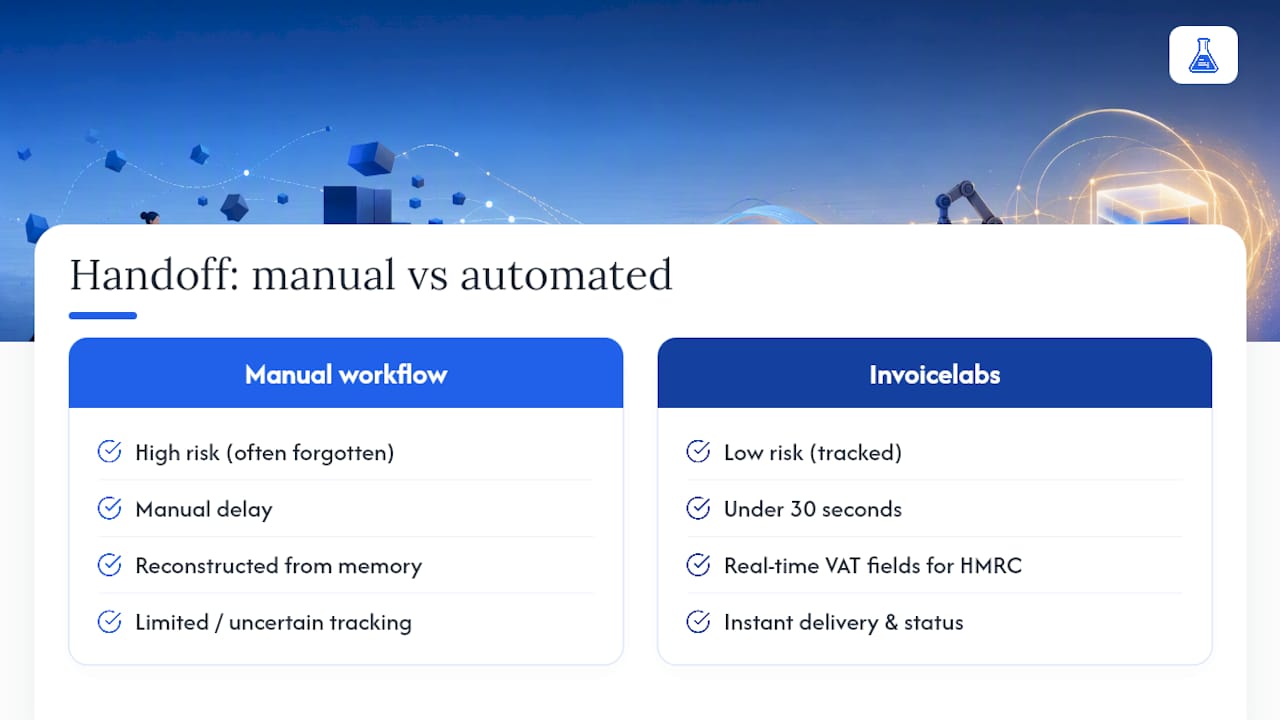
Invoicelabs was built around closing that gap. It lets you generate a professional invoice in under 30 seconds, with real-time tax calculations that populate the VAT fields HMRC expects, rather than leaving you to reconstruct them from memory after the fact. Instant delivery and status tracking mean you know exactly when a pro forma was viewed and when it converted into a paid, compliant invoice, so the 30 day clock never becomes a guessing game.
For small businesses issuing pro formas regularly, whether for deposits or export documentation, that kind of automation turns a compliance risk into a background process instead of a monthly scramble.
— Black Flame Digital
Get started with free pro forma and VAT invoice templates
This service cuts out the guesswork between a pro forma and a compliant VAT invoice, so you are not stuck rebuilding a document from scratch once payment clears.
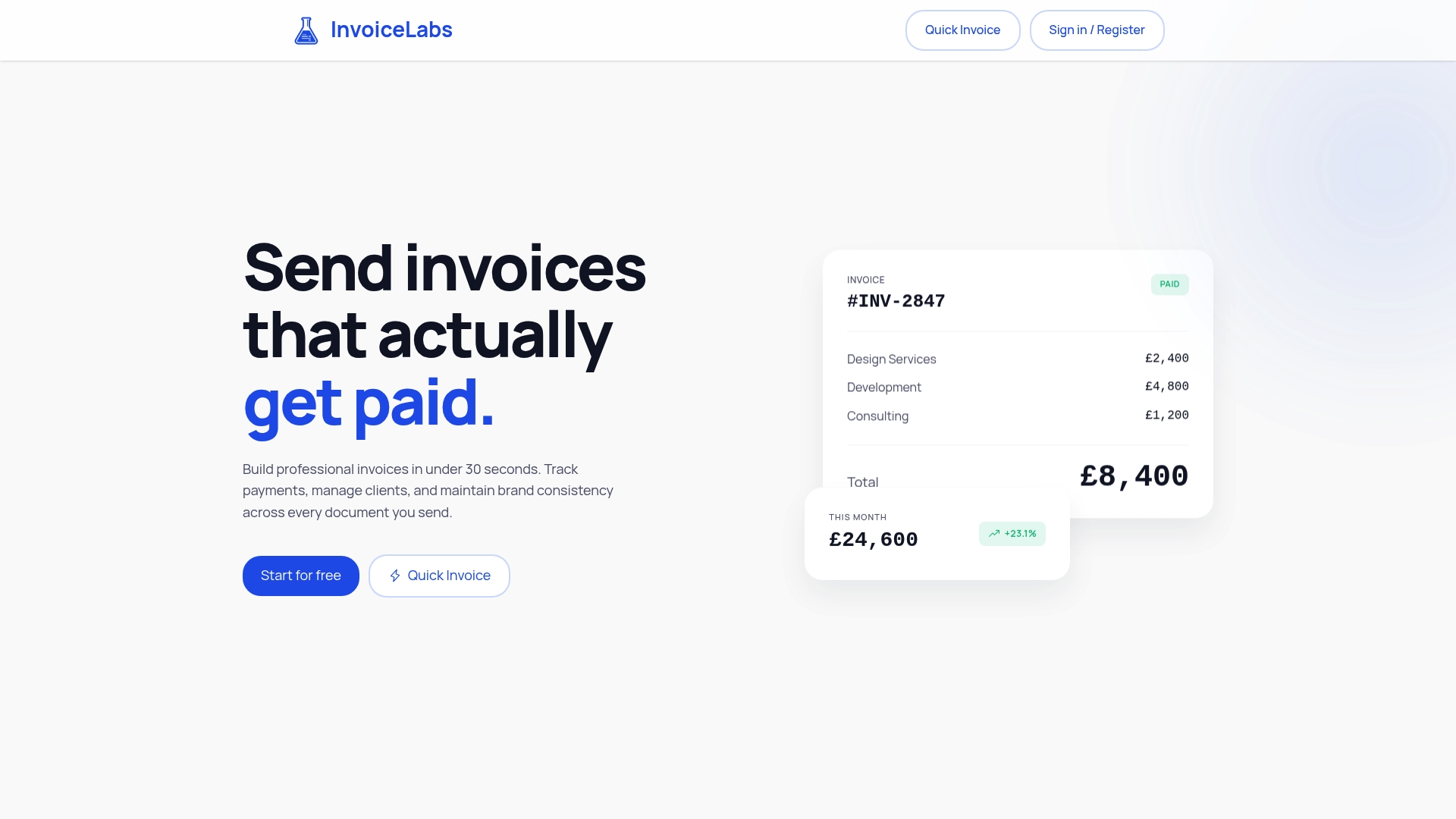
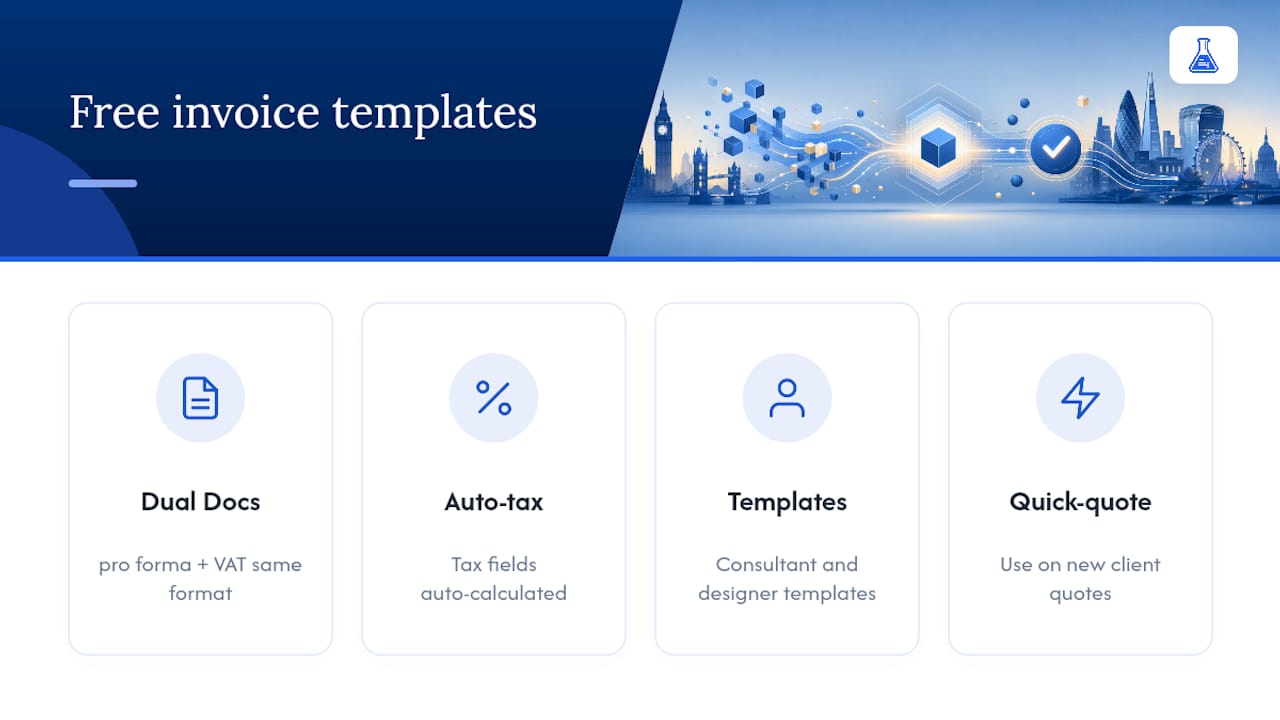
If you’ve been cobbling together pro formas in a word processor and hoping you remember to convert them, the free invoice generator builds both in the same format, with tax fields calculated automatically rather than typed in by hand. Freelancers and consultants can start from a profession-specific template for consultants, while creatives running client deposits might prefer the graphic designer template, which is already structured for upfront payment requests.
Try a quick-invoice tool on your next new client quote and see how fast the pro forma to VAT invoice conversion can be.
Where these figures come from
The VAT timing rules and required invoice fields in this guide come from HMRC’s own internal manual on VAT invoice timing, which also confirms that a document labeled “pro forma” cannot double as a VAT invoice. Customs and export field guidance draws on GOV.UK’s import and export resources. Practical use cases and the deposit workflow reference Stripe’s UK explainer and Sage’s guidance on labeling and enforceability.
Sources
- VATREC9020 - VAT invoices: timing and requirements - HMRC internal manual
- UK proforma invoices: VAT rules, customs use, and when to issue one — Stripe
- What is a pro forma invoice? - Sage UK
Recommended
Send your next invoice in seconds
Create professional invoices, track payments and get paid faster — free to start.